
Junk Removal Cost: How Pricing is Actually Calculated
Junk removal cost is usually based on how much space your items take up, how much work is needed to remove them, and what it costs to dispose of the material. A small pile near the driveway may cost much less than the same amount of junk carried down stairs or removed from a packed storage unit.
That is why two jobs that look similar in photos can have different prices. The amount of junk matters, but access, weight, labor, and the type of material can change the final number too.
What Goes Into the Cost of Junk Removal?
Most junk removal services look at several parts of the job before giving you a price. Volume is often the starting point, but it is rarely the only factor.
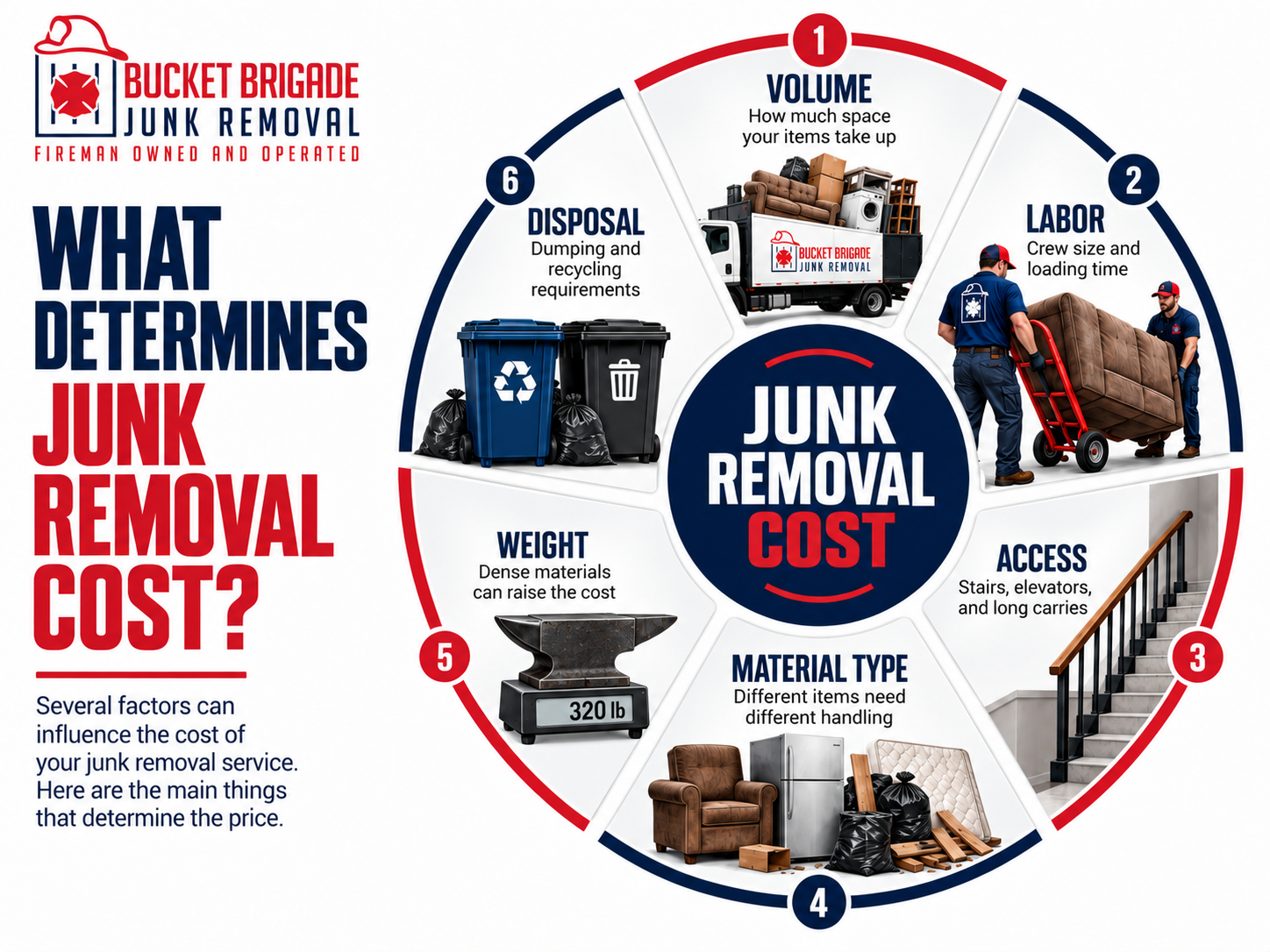
The main pricing factors include:
- How much space the junk takes up in the truck or dumpster
- How many people are needed to move it
- How long loading is expected to take
- Whether stairs, elevators, tight hallways, or long carrying distances are involved
- The weight and type of material
- Disposal or recycling requirements
- Whether anything needs to be taken apart before removal
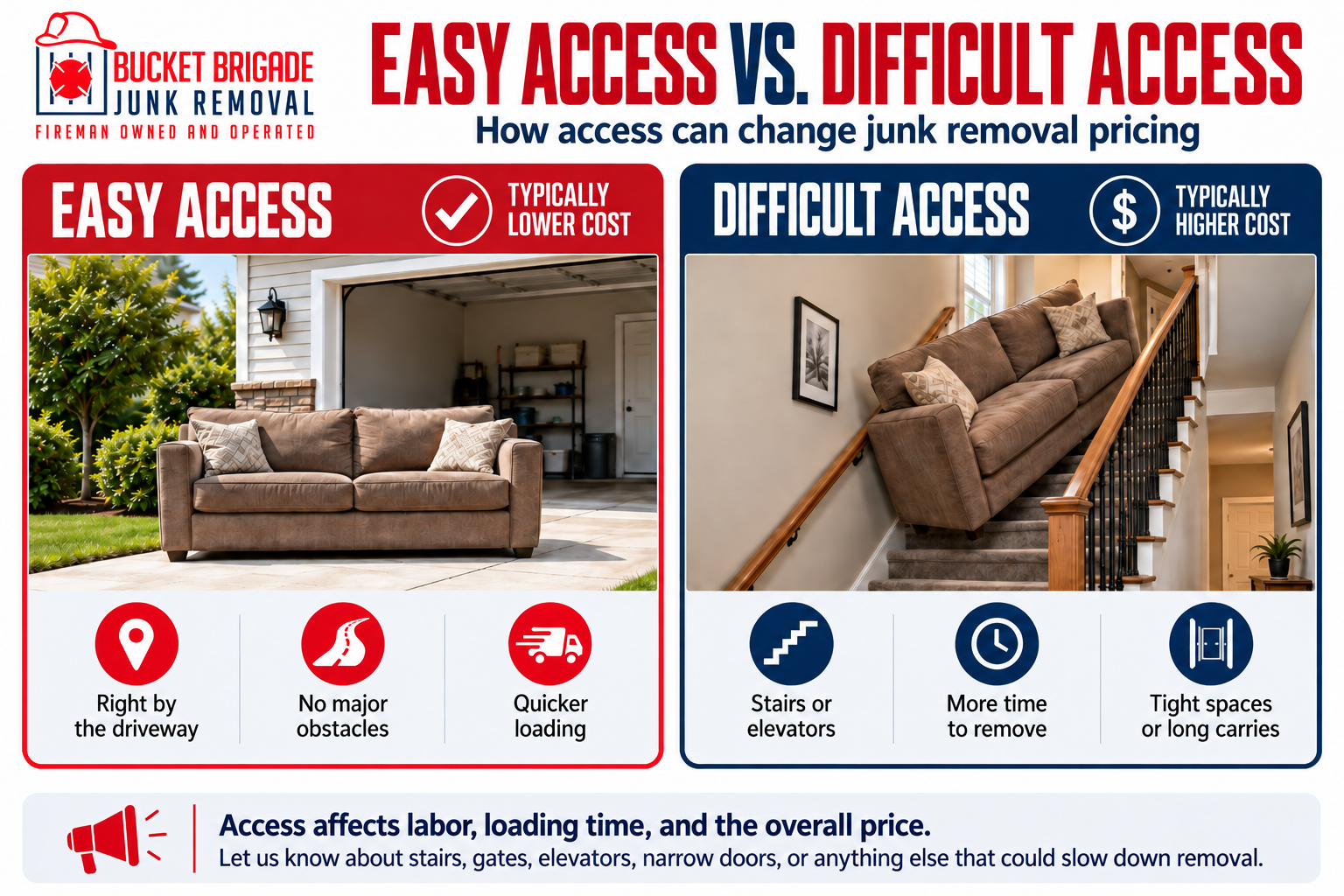
A couch sitting in a garage is fairly simple to reach. A large sectional on the second floor may take more time and more careful lifting, even if both take up a similar amount of truck space.
Volume Is Usually the Starting Point
For many household jobs, the cost of junk removal is tied closely to how much room the load takes up.
You may hear estimates described as a fraction of a truck, trailer, or dumpster. That could mean a small load, half load, or full load. This method makes sense because larger loads require more hauling capacity and usually create higher disposal costs.
The best way to compare quotes is to ask what the quoted amount actually covers. A low number does not tell you much unless you know how much volume, labor, and disposal are included. Photos can often help a junk removal company estimate the amount of space your items will use. For larger cleanouts or jobs where the full amount is hard to see, an on-site look may give a clearer estimate.
Labor and Access Can Change the Price
Junk that is easy to reach usually takes less labor to remove. Junk buried in a packed room, spread across a property, or located upstairs takes more time.
Common labor factors include:
| Job condition | Why it can affect pricing |
|---|---|
| Items next to the driveway | Short carrying distance |
| Furniture upstairs | More lifting and maneuvering |
| Packed garage | Items may need sorting and careful removal |
| Storage unit cleanout | Volume may be difficult to judge until opened |
| Large furniture | May require multiple crew members |
| Light demolition debris | May require extra labor before hauling |
You can make an estimate more accurate by mentioning access before the crew arrives. Tell the junk removal company about stairs, gates, elevators, narrow doors, or anything else that could slow down removal.
The Type of Junk Matters Too
Not every item costs the same amount to handle or dispose of.
Furniture, household clutter, yard debris, and construction material can all take up space differently. Some loads are bulky but light. Others are compact and very heavy. Construction and demolition material is a good example. The U.S. EPA estimated that about 600 million tons of construction and demolition debris were generated in 2018, more than twice the amount of municipal solid waste generated that year.
Heavy or specialized debris may therefore be priced differently from normal household junk. Disposal facilities can also have different rules and fees depending on the material.
Some Materials Need Special Disposal
One common mistake is assuming a junk removal service can take anything that fits in the truck. Certain materials need special handling. Paint, chemicals, some batteries, fuel, pesticides, and similar items may fall under household hazardous waste rules.
The EPA explains that products with toxic, corrosive, reactive, or flammable ingredients can require special care during disposal. Before booking, mention anything unusual in the load. That gives the crew a chance to tell you what can be removed and what you may need to take to a local hazardous waste program instead.
This also prevents one of the most common pricing problems: getting an estimate for ordinary household junk, then discovering that part of the pile needs a completely different disposal method.
How to Get a More Accurate Junk Removal Quote
The easiest way to improve a quote is to give the company a clear picture of the job before scheduling.
A useful approach is:
- Show the full amount of junk: Take wide photos instead of close-ups. Include everything you expect to have removed.
- Explain where the items are located: Mention stairs, elevators, garages, sheds, backyards, or long carrying distances.
- Point out unusual materials: Tell the company about very heavy objects, construction debris, damaged furniture, or anything you are unsure about.
Photos work well for many routine pickups. Large cleanouts and some demolition jobs may need an in-person assessment because it is harder to judge the total volume and labor from pictures alone.
If you add more items after receiving the quote, expect the price to be reviewed. The original estimate was based on the amount of material shown or described.
Why the Cheapest Quote Is Not Always the Lowest Final Cost
A low quote can look good at first, but the better question is what the price includes. Before you book, ask whether labor, hauling, disposal, stairs, and extra loading time are already covered.
Watch for:
- Disposal fees
- Extra labor charges
- Price changes for added junk
A clear estimate should tell you what you are paying for before the job starts. The EPA reports that about
146.2 million tons of municipal solid waste went to landfills in 2018, which helps show why disposal is a real part of junk removal pricing.
A Good Estimate Starts With Good Information
There is no single junk removal cost that fits every home, cleanout, or pile of debris. The best estimate comes from looking at volume, labor, access, material type, and disposal together.
At
Bucket Brigade Junk Removal, we ask for photos and details about the job so we can explain the pricing before the work starts. Larger cleanouts and some demolition jobs may need an in-person look. Our goal is simple: understand what needs to go, give you clear information, and get the job handled without making things harder than they need to be.
Frequently Asked Questions
Can I get a junk removal price from photos?
Often, yes. Clear photos can show the amount of material, the size of large items, and how much space the load may take up. Wide photos are usually more helpful than several close-ups. Include stairs or other access issues when possible. If the job is especially large or difficult to judge from pictures, an on-site estimate may make more sense.
Why could my final price change after I receive an estimate?
A price may need to change when the actual job is different from what was originally shown. For example, there may be more junk behind a pile, additional items may be added, or access may require more labor than expected. Showing the complete load and explaining the job clearly before scheduling helps reduce surprises.
What information should I have ready when asking about junk removal cost?
Try to provide:
- Photos of everything you want removed
- The location of the items
- Any stairs, elevators, gates, or narrow access areas
- Large or unusually heavy items
- Construction debris or other special materials
- Anything you are not sure can be hauled away
The more complete the information is, the easier it is to understand what the job will involve.
Can hazardous items be included with regular junk removal?
No. Certain materials cannot be included with regular junk removal. We do not take hazardous waste, paints and thinners, gas, asbestos, or biohazard materials.
How can I find out what my own cleanout may cost?
Every cleanout is a little different, so the most useful starting point is showing us what needs to go. At Bucket Brigade Junk Removal, we can review photos for many jobs and explain what factors will affect the price. For a larger project, talking through the details with us can also make it easier to decide whether an on-site look is needed before scheduling.